Loan Participations and Loan Sales Guide Cover

The Complete Guide to Loan Participation, Loan Sales, and Loan Syndications for Banks

By Article, Insights

If you’re a banker trying to keep lenders lending while managing concentration risk, liquidity pressure, and staffing constraints, you’ve probably bumped into the same bottleneck: the “capital markets” tools you need (loan participations, loan sales, syndications) are often run on spreadsheets, email, and manual reconciliation.

That works—until it doesn’t. As volumes rise, portfolios diversify, or participants expand, the operational drag and “out-of-balance” risk climb fast. And when the process is heavy, the business outcome is predictable: fewer sell-downs, fewer partners, slower closings, and missed opportunities.

This guide breaks down how loan participation (plus syndications and whole-loan sales) actually work, why they matter right now, and what a modern bank should look for if you’re evaluating tools to do this at scale.


Key takeaways

  • Loan participation lets you share a single loan’s exposure while keeping the borrower relationship with the lead lender—great for lending limits, concentration risk, and liquidity planning.

  • Loan syndication typically forms a lender group at origination under a common structure—useful for larger deals and shared underwriting at close.

  • Whole-loan sales transfer the entire loan to another party—often used for liquidity, balance sheet repositioning, or portfolio strategy.

  • Regulators expect buyers to underwrite and administer purchased loans/participations as if originated by the buyer—and caution against over-reliance on sellers.

  • The banks that win here treat participations as a repeatable operating system, not a one-off legal project.


Want a faster, safer way to run loan participations and loan sales? Explore how Participate (a BankLabs innovation) helps banks automate workflows, participant servicing, and reporting—without living in spreadsheets.
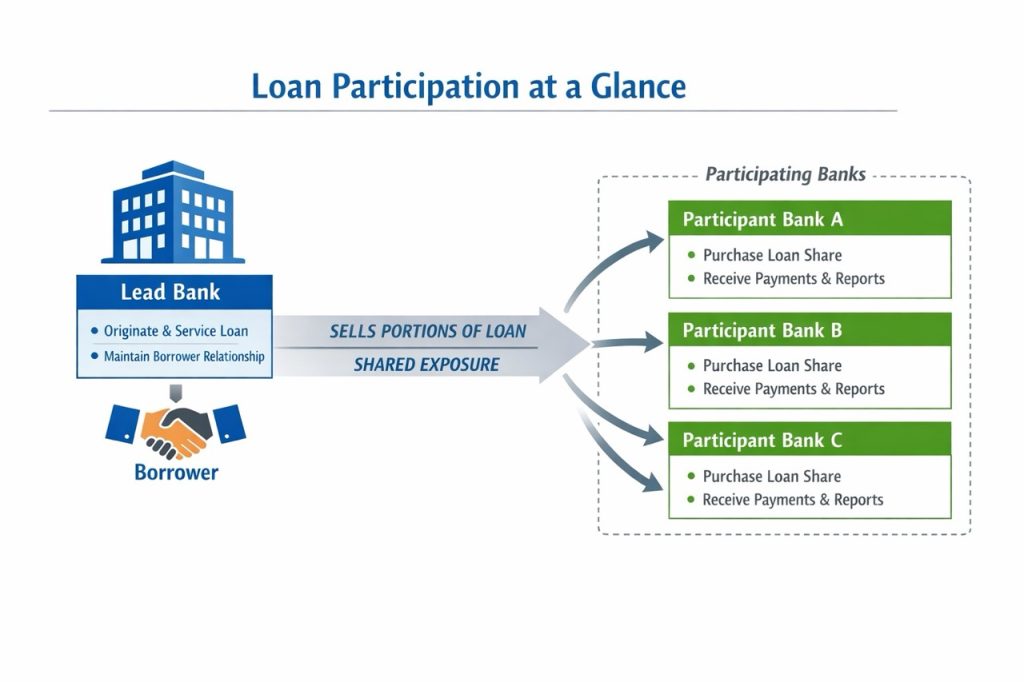

Loan participation structure showing lead bank, participants, and shared exposure while the lead retains borrower relationship.

Loan participation structure showing lead bank, participants, and shared exposure while the lead retains borrower relationship.


What is a loan participation?

A loan participation is when the originating (lead) bank sells a portion of a loan to one or more participating institutions, while typically retaining the borrower relationship and servicing role.

Why banks use loan participations

Most banks use loan participations to:

  • Stay within legal lending limits while keeping the client relationship

  • Reduce concentration risk (borrower, industry, geography, tenor)

  • Improve liquidity flexibility by selling down exposure

  • Generate fee income via servicing/administration in many structures

  • Build reciprocal partner networks (send deals, receive deals)

Loan participation vs. “just buying a loan”

From a workflow standpoint, participations can look like “loan buying,” but they introduce ongoing operational complexity:

  • Shared balances must remain aligned

  • Payments/fees/rate changes need accurate allocation

  • Reporting and notices go to multiple institutions

  • Documents must be controlled and auditable

Expert tip: If your team says “we reconcile it at month-end,” you’re carrying unnecessary operational and reputational risk—because participant confidence erodes long before month-end.


Loan participation vs. loan syndication vs. whole-loan sale

Here’s a practical way to choose the right structure.

1) Loan participation (most common for many community/regional use cases)

Best when you want to:

  • Keep the borrower relationship

  • Sell down exposure post-close or near-close

  • Work with a small group of known partner banks

  • Maintain speed and flexibility

2) Loan syndication (common for larger, structured deals)

Best when you need:

  • Multiple lenders committed at origination

  • A clearer “agent/arranger” structure

  • Formal coordination across the lender group

  • Standardized communications and consent mechanics

3) Whole-loan sale (clean transfer)

Best when:

  • You want full liquidity relief

  • You’re repositioning a portfolio

  • A buyer wants full ownership/control

  • You want to simplify ongoing administration (because you no longer service)


Why loan participations matter more right now (and what regulators are signaling)

Balance sheets have been under pressure: liquidity planning, credit normalization, and concentration scrutiny are not theoretical—they’re daily management issues.

Regulators have been explicit that when institutions purchase loans or participations, they should manage them with the same rigor as originated assets and avoid over-reliance on lead institutions or third parties.

The OCC similarly frames loan purchase activities (including participations and participations in syndicated loans) as long-standing practices that must align with strategy, risk appetite, and strong due diligence/credit administration.

Did you know? The FDIC updated its advisory (amended February 3, 2026) to remove references to reputation risk—while keeping the core expectations around independent underwriting, administration, and third-party risk.


The real bottleneck: operations, not opportunity

Most banks don’t struggle with why to do participations—they struggle with how to do them repeatedly without friction.

Common pain points in traditional loan participation workflows

  • Manual “system of truth” issues (multiple spreadsheets, versions, email chains)

  • Out-of-balance risk between lead and participants

  • Slow participant communications (rate changes, payments, remittance notices)

  • Document sprawl (attachments, unsecured sharing, scattered files)

  • Limited visibility for leadership (portfolio analytics, performance reporting)

  • Scaling constraints (volume increases require headcount increases)

This is exactly why automated platforms are showing up in bank operating models: not to “innovate for innovation’s sake,” but to make participation activity repeatable and auditable.
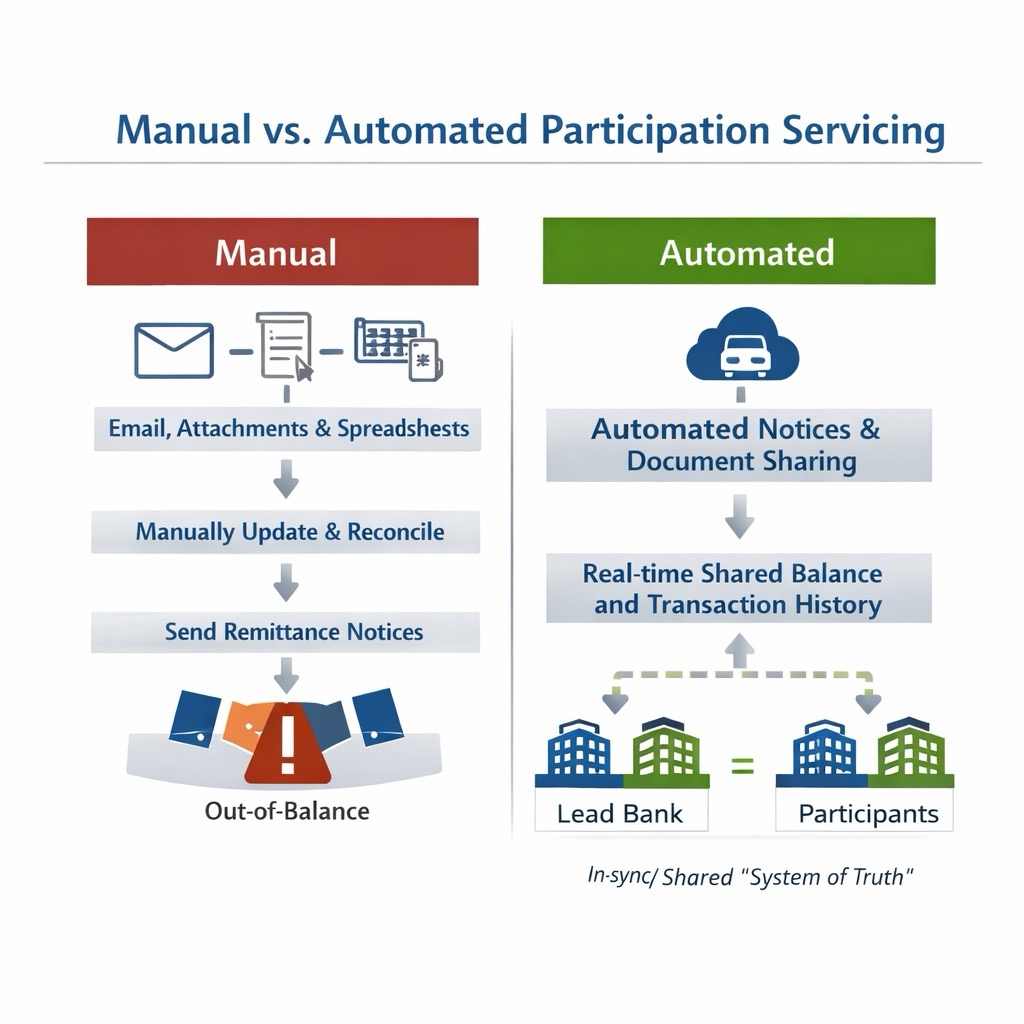

Side-by-side workflow comparing spreadsheet/email processes to automated servicing with real-time balances and automated notices.

Side-by-side workflow comparing spreadsheet/email processes to automated servicing with real-time balances and automated notices.


What “loan participation automation” actually means

When bankers hear “automation,” they sometimes imagine a rip-and-replace, loan participation automation actually means:

A) A standardized workflow for selling down and onboarding participants

  • Publish the opportunity (internally or to approved partners)

  • Secure document sharing + approvals

  • Built-in NDAs/participation agreement workflow (or your own templates)

  • Track status and commitments

B) Ongoing participant servicing without manual reconciliation

  • Automated payment splits (principal/interest/fees)

  • Automated rate change notices

  • Shared balances and transaction history

  • Centralized documents + audit trail

C) Reporting and visibility that helps you scale

  • Buy-side / sell-side dashboards

  • Portfolio analytics

  • Board-friendly reporting

  • Exception-based operations rather than “touch everything”

Expert tip: Ask vendors one blunt question: “Who is the system of truth when our core and our participants disagree?” The best answers include shared balances + traceable transaction history.


A buyer-centric checklist: what to look for in a loan participation tool

If you’re evaluating solutions (or even building internally), here’s a practical checklist.

Workflow + speed

  • Can you package and share an opportunity in minutes, not days?

  • Can you control distribution (specific partners vs. broader network)?

  • Can you track approvals and commitments without chasing email?

Servicing + controls

  • Do participants see the same balance and history you see?

  • Are rate changes and notices automated?

  • Is reconciliation built into the process (or offloaded to month-end)?

Data + integrations

  • Can it integrate with your LOS/core (or start quickly without deep integration)?

  • Does it support the data elements you care about (loan terms, covenants, reporting)?

  • Can you onboard existing participations to get value immediately?

Risk + compliance alignment

  • Secure document handling and permissioning

  • Audit trail and approvals

  • Clear third-party risk management support (SOC posture, access controls, etc.)


Where Participate fits

Loan participations and loan sales are powerful tools — but without the right operating structure, they become operationally heavy.

As participation volume grows, spreadsheets, manual notices, and reconciliation work can limit scalability. What starts as a strategic advantage can quickly turn into administrative drag.

Participate, developed by BankLabs, is built to serve as the operating layer for loan participations, syndications, and loan sales. It standardizes workflow, automates participant servicing, and creates real-time balance transparency between originators and participants.

With the right system in place, banks can:

  • Automate deal workflow and participant onboarding

  • Maintain real-time shared balances

  • Eliminate reconciliation friction

  • Centralize documentation and reporting

  • Scale participation activity without scaling headcount

The outcome is simple: more confidence, less operational risk, and a repeatable framework for growing your loan sales ecosystem.


FAQ

What is the difference between a loan participation and a loan syndication?
A loan participation typically involves a lead lender selling portions of a loan (often after origination) while keeping the borrower relationship. A syndication usually forms a lender group at origination under a coordinated structure (often with an agent/arranger).

Can smaller banks benefit from loan participations?
Yes. Participations allow smaller institutions to access larger deals, diversify portfolios, and manage exposure more effectively.

How do loan participations help with concentration risk?
They let you sell down exposure by borrower/industry/geography/tenor while keeping the client relationship and continuing to originate new business.

What’s the biggest operational risk in participations?
“Out-of-balance” conditions and incomplete information sharing—especially around payments, rate changes, fees, and document versions. That risk grows with volume and participant count.

Can we modernize without a massive integration project?
Yes, with Participate you can go live in less than 24 hours. Many banks start by standardizing workflow and servicing visibility first, then expand integrations over time based on ROI and operational readiness.


Conclusion

Loan participations, syndications, and loan sales aren’t niche tools—they’re core levers for balance sheet strategy, risk management, and growth. The difference between “we do participations occasionally” and “we do participations confidently” is almost always the operating model: visibility, controls, and repeatability.

If you want to turn loan participation activity into a scalable process—without adding headcount or living in reconciliation—explore Participate’s approach to workflow + servicing automation. Request a Free Demo.

svb1

The Silicon Valley Bank Failure

By Article, Insights

In “THE SILICON VALLEY BANK SAGA PART 1: WHAT HAPPENED? BY THE NUMBERS” we searched behind the popular press pronouncements to explore elements of Silicon Bank’s risky investment in long-term treasury instruments and how these investments eventually contributed to the failure of the Bank.

Banking is Packed with Inherent Risks

Banks constantly face a variety of risks in the ordinary course of their business: in receiving deposits and originating loans or investing deposits for a return in excess of the cost of the deposits. The Office of the Comptroller of the Currency (OCC) has identified nine categories of risks banks face: Credit, Interest Rate, Liquidity, Price, Foreign Exchange, Transaction, Compliance, Strategic and Reputation.

Each day, Bankers must navigate this complex, shifting mine field of risks any one of which may be sufficient to sink the Bank.

As recently demonstrated by the Silicon Valley Bank failure, interest rate risk alone may be sufficient to cripple and eventually destroy a bank. In SVB’s failure, the sixteenth largest bank in the United States was unable to fend off a full-fledged bank run. It succumbed to a tsunami of withdrawals in only a matter of a few days.

The Bank’s end was swift and sure.


Who’s Responsible for Addressing Interest Rate Risk?

The short answer is: everyone in banking governance and management is responsible.

In a 2010 document “Advisory on Interest Rate Risk Management”, the FDIC sets out general standards for IRR management. Numerous subsequent pronouncements by each regulator reinforce the general framework expressed in this Advisory.

The Advisory admits the interest rate risks banks and bankers face ”The regulators recognize that some degree of IRR is inherent in the business of banking.”

Responsibility is then heaped on the Board of Directors –

“Existing interagency and international guidance identifies the board of directors as having the ultimate responsibility for the risks undertaken by an institution – including IRR.” (Emphasis added)

Senior management then gets its share of responsibility –

“Senior management is responsible for ensuring that board-approved strategies, policies, and procedures for managing IRR are appropriately executed within the designated lines of authority and responsibility.” (Emphasis added)

If you are reading this post, you likely have responsibility for conquering interest rate risk at your institution. Ominously, the penultimate paragraph contains an admonition regarding the failure of Directors and Managers to effectively manage IRR –

“Material weaknesses in risk management processes or high levels of IRR exposure relative to capital will require corrective action.”

History will determine the degrees of responsibility of the Board and Managers of Silicon Valley Bank bear in the Bank’s stunning failure.


What’s a Banker To Do?

In a section title “Risk Mitigating Steps” the FDIC provides some general guidance as to tools to manage IRR. Specifically, should IRR exceed or approach the institution’s limits “institutions can mitigate their risk through balance sheet alteration and hedging.”

Bankers should not wait until the risk threshold is in sight (or is behind them) to take action. Proactive balance sheet management helps banks avoid traps like the traps Silicon Valley Bank faced.

The next paragraph describes appropriate hedging activities but no guidance is provided regarding “balance sheet alteration.”

Bankers understand the asset side of the Balance Sheet. Assets revolve around two accounts: Cash and Loans Receivable.

Originating loans can be time consuming. Properly structuring loans may require expertise that is outside the bank’s skill set. Local loan demand may be insufficient to meet the bank’s lending needs. Loan servicing can be expensive and tedious.

Participate solves these problems. By providing a device-independent platform common to both Originators and Participants, participation communication is streamlined. Participation documents can be securely shared, and messages can be exchanged between Originator and Participant from within the Participate platform. The tedious back and forth process of agreeing on terms and executing Participation Agreements is handled with the click of a button. Standardized documents can be e-signed in a quick and seamless workflow.

The old participation slog can be reduced from days or weeks to minutes or hours.

Servicing is simplified. No more maintaining complex, error-ridden, non-audit friendly spreadsheets. Participants can opt-in to receive email and in-platform notifications each time a participation document is uploaded, a payment is disbursed to a participant or a draw and been processed and the participant’s share is requested. Printable forms contain wire instructions allowing them to be used as support for wire transactions by either the originator or the participant. They provide a firm audit trail.

Buying and selling participations allows banks to manage borrower concentrations, manage loan type and geographic concentrations and brings horsepower to the regulatory admonition to “mitigate risk through balance sheet alteration.”

Participate also provides a national marketplace for the purchase and sale of participations greatly expanding the scope of a bank’s contacts.


Talk to BankLabs (501.246.5148) or sales@banklabs.com) to discuss how we can help you manage interest rate risk.

Construction Loan Automation helps increase draw incom

Loan profits increase in 2020 according to MBA report

By Insights, Uncategorized

The average profit on each loan originated in 2020 was up significantly compared to the average profit in 2019. Construction loan automation streamlines the loan process, resulting in quicker turnaround.

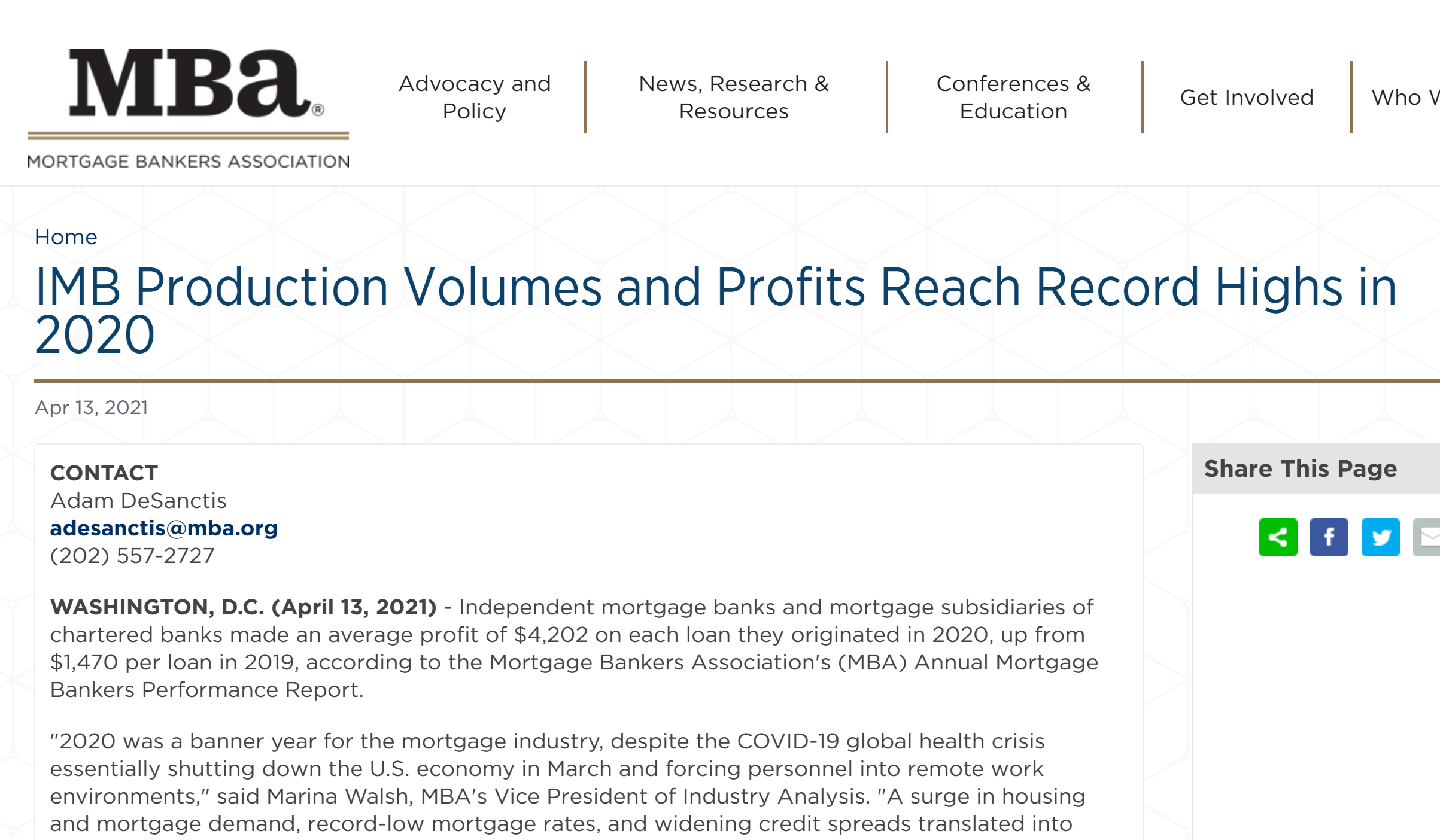
“Independent mortgage banks and mortgage subsidiaries of chartered banks made an average profit of $4,202 on each loan they originated in 2020, up from $1,470 per loan in 2019, according to the Mortgage Bankers Association’s (MBA) Annual Mortgage Bankers Performance Report.”


What this means for Lenders

What does this mean for lenders? Increasing draw fee income is on everyone’s mind. Bankers are turning to new technology like construction loan automation to do just that. Construct is an online tool helping banks streamline their construction lending process, and borrowers love using it. It’s a great way to differentiate your bank for the competition.

Bank leaders around the country are getting behind loan automation tools like Construct as a way to increase their interest fee income. By speeding up the process, lenders are saving days on their loan cycles, resulting in higher margins.

How Construct Helps

What else can loan automation tools do for you? Lenders are finding that staff has a greater capacity to take on more loans with Construct, because so many of the tedious steps are taken out of the equation for them. Instead of 100 projects, some lenders are able to now handle 250 projects using Construct. As the construction sector bounces back from Covid, more companies will be looking for loans. In fact, demand for newly constructed housing is on the rise too. This is great news for lenders looking to increase their project portofolio.

Construct takes the spreadsheets out of the lending process and sends users real time alerts. When an inspection is done, you automatically get notified and can complete the next steps from anywhere, right from your phone, in minutes.


IMB Production Volumes and Profits Reach Record Highs in 2020 | Mortgage Bankers Association (mba.org)

Construction Loan Automation helps increase draw incom

10 ways that construct save bankers time

CALCULATOR

By Article, Insights, Uncategorized No Comments

More banks are looking to balance their sheets than ever before

Participate is helping bankers better manage their balance sheets. 


BankLabs and nCino Unite to Streamline Loan Participation and Syndication

By Press Release

New Partnership Delivers an Integrated Solution for Automating Loan Participation Processes

BankLabs, a majority holder of Participate and a leader in financial technology solutions, announces a strategic partnership between Participate and nCino (NASDAQ: NCNO), aimed at enhancing the automation of loan participations and syndications for financial institutions.

This powerful partnership enables financial institutions using nCino’s Commercial Banking Solution to seamlessly integrate with the Participate platform. This integration delivers a comprehensive digital marketplace, automating the transfer and management of loans, streamlining workflows, and simplifying post-sale operations.


Driving Innovation in Loan Trading

With the Participate-nCino integration, financial institutions can automate previously manual processes and gain real-time access to crucial data, ensuring complete transparency for all parties involved in a loan transaction. By automating the back-office management of loan participations, institutions can reduce operational bottlenecks, eliminate errors, and minimize the need for reconciliations.

According to Matt Johnner, Co-Founder and President of BankLabs:

“This partnership marks an important step forward in helping financial institutions enhance their liquidity and streamline their loan participation processes. Participate, combined with nCino’s leading cloud banking platform, delivers the automation tools necessary for institutions to efficiently manage their balance sheets in today’s fast-paced banking environment.”


Empowering Financial Institutions with Next-Level Automation

The integration of Participate with nCino offers multiple advantages that enhance institutional agility, risk management, and profitability:

  • Full Automation: The partnership digitizes the entire loan participation lifecycle, from origination to post-sale management, reducing the reliance on spreadsheets and manual processes.
  • Transparency Across the Board: Real-time data sharing ensures all participants—originators and buyers—have instant access to the latest loan balances and transaction details.
  • Scalable Solutions: The platform is designed to support institutions of any size, enabling them to expand their participation networks and execute more complex deals with ease.
  • Rapid Implementation: With Participate’s cloud-based technology, financial institutions can be fully operational within a single day, drastically reducing the time-to-value.

About BankLabs

BankLabs is dedicated to developing innovative financial technology that transforms traditional banking operations. Our solutions, like Participate, empower financial institutions to streamline loan participation and syndication, increase liquidity, and manage risk more effectively. By offering cutting-edge technology and unmatched industry expertise, BankLabs continues to lead the way in modernizing the banking industry.

Discover more at www.banklabs.com.

Revolutionizing Loan Trading with BankLabs’ Innovative Platform

By Article, Blog

In today’s fast-paced financial world, efficiency and innovation are paramount. At BankLabs, we’re not just keeping up with the times – we’re setting the pace. Our advanced loan trading platform is reshaping how financial institutions approach loan management, trading, and portfolio optimization. Let’s dive into how this groundbreaking technology is revolutionizing the industry.

A Comprehensive Solution for Modern Banking Challenges

The financial sector faces numerous challenges: stringent regulations, market volatility, and the need for rapid, informed decision-making. Our platform addresses these head-on by offering a comprehensive marketplace that supports all loan types and sizes. From commercial real estate to consumer loan pools, and from small business loans to complex syndicated deals, our system is designed to handle it all with unparalleled efficiency.

But what sets BankLabs apart isn’t just the breadth of our offerings – it’s the depth of our innovation.

Expanding Horizons: A Nationwide Network

Imagine having the power to connect with potential buyers and partners across 48 states at your fingertips. That’s the reality for users of our platform. This extensive network doesn’t just facilitate transactions; it opens up new horizons for portfolio diversification and risk management strategies that were once out of reach for many institutions.

Consider a community bank in Iowa looking to diversify its agricultural loan portfolio. Through our platform, they can easily connect with banks in different regions, perhaps finding a partner in California interested in balancing their tech-heavy portfolio with some Midwest agriculture exposure. This level of connectivity and opportunity is transforming how banks approach their loan strategies.

Curated Loan Clubs: Precision in Partnership

One size doesn’t fit all in finance, and our platform recognizes this fundamental truth. Our unique club feature allows institutions to create curated groups based on specific criteria. Whether it’s regional focus, institution size, or specialized loan types, these clubs ensure that loan offers reach the most relevant and interested parties.

For example, a group of banks specializing in healthcare facility financing could form a club, streamlining their ability to collaborate on larger projects or trade portions of their portfolios to maintain optimal exposure levels. This targeted approach not only increases the efficiency of loan trading but also fosters stronger, more strategic partnerships within the banking community.

Flexibility at Your Fingertips

In the dynamic world of finance, flexibility is key. Our platform offers versatile deal publishing options, allowing institutions to tailor their approach based on their specific needs and strategies. Whether you’re looking to quietly gauge interest within a select group or broadcast an opportunity to our entire network, the choice is yours.

This flexibility extends to how deals are structured and presented. Our system supports everything from straightforward participation agreements to complex syndicated loan arrangements, ensuring that no matter how nuanced the deal, our platform can accommodate and streamline the process.

Automation: The Future of Loan Trading

Perhaps the most transformative aspect of our platform is its comprehensive automation capabilities. From the moment a loan is published to the final settlement, our system automates processes that traditionally required extensive manual intervention. This isn’t just about saving time – it’s about redefining what’s possible in loan trading.

Imagine being able to publish a loan, receive bids, conduct due diligence, and close the deal, all within a fraction of the time it once took. Our automation extends to document generation, compliance checks, and even post-close servicing, dramatically reducing the potential for errors and freeing up valuable human resources for more strategic tasks.

Innovation Backed by 3 Patents

At BankLabs, we’re not content with the status quo. Our platform is built on patented technology that represents years of research, development, and real-world application. These innovations aren’t just theoretical – they’re practical solutions to real-world banking challenges, tested and refined in the crucible of daily financial operations.

The Impact: Beyond Efficiency

While the efficiency gains are clear, the impact of our platform goes much deeper. By enhancing lending capacity, institutions can maintain and strengthen client relationships, even when faced with lending limits. The ability to easily distribute loan exposure across multiple partners mitigates risk, creating more stable and resilient portfolios. Moreover, the additional revenue generated through transaction fees provides a welcome boost to non-interest income, a crucial factor in today’s low-interest-rate environment.

Perhaps most importantly, our platform ensures regulatory compliance through standardized processes and secure transactions. In an era of increasing regulatory scrutiny, this peace of mind is invaluable.

Looking to the Future

As we look to the future, it’s clear that technology will continue to play an increasingly vital role in the financial sector. At BankLabs, we’re committed to staying at the forefront of this evolution, continuously refining and expanding our platform to meet the emerging needs of our clients.

The future of loan trading is here, and it’s more efficient, more connected, and more innovative than ever before. Are you ready to be part of this revolution?

To explore how BankLabs’ innovative loan trading platform can transform your institution’s approach to loan management and trading, visit ParticipateLoan.com. Join us in shaping the future of finance, one trade at a time.

Unlocking Private Credit Opportunities: How Loan Trading Platforms are Revolutionizing the Industry

By Article, Blog

The world of private credit is undergoing a significant transformation, driven by the emergence of innovative loan trading platforms. These digital marketplaces are reshaping the way private lenders access, trade, and manage their loan portfolios, opening up new avenues for growth and profitability. Participate, a leading loan trading platform, is at the forefront of this revolution, offering a comprehensive solution tailored to the unique needs of private credit firms.

Traditionally, private credit institutions have faced numerous challenges when it comes to loan trading. The process of finding suitable counterparties, conducting due diligence, and executing transactions has often been time-consuming, inefficient, and opaque. Moreover, the lack of standardization and the reliance on manual processes have made it difficult for private lenders to scale their operations and optimize their portfolios.

This is where Participate comes in. Our cutting-edge platform leverages advanced automation and data analytics to streamline the entire loan trading lifecycle, from origination to settlement. By providing a centralized marketplace for private credit transactions, Participate enables lenders to efficiently connect with a global network of investors, access a wide range of investment opportunities, and execute trades seamlessly.

One of the key advantages of Participate is its ability to cater to the diverse needs of private credit firms. Our platform supports a variety of asset classes and structures, including specialty finance, online lending, marketplace lending, and private credit funds. This flexibility allows lenders to diversify their portfolios, tap into new markets, and capitalize on emerging trends in the industry.

Participate’s intelligent matching algorithms are another game-changer for private credit firms. By analyzing vast amounts of data on borrower characteristics, credit risk, and investor preferences, our platform can quickly and accurately match lenders with compatible counterparties. This not only saves time and effort but also enhances the quality of transactions, ensuring that lenders are connected with investors who align with their specific criteria.

In addition to facilitating trades, Participate offers a range of value-added services that empower private credit firms to optimize their loan portfolios. Our platform provides real-time market data, performance analytics, and risk management tools, enabling lenders to make informed decisions and stay ahead of the curve. Moreover, Participate’s automated workflows and standardized documentation streamline the administrative aspects of loan trading, reducing operational costs and minimizing the risk of errors.

For private credit firms seeking to expand their capital base and accelerate their growth, Participate is an invaluable resource. By providing direct access to a global pool of investors, our platform helps lenders secure the funding they need to scale their businesses and create shareholder value. Moreover, Participate’s transparent and efficient marketplace ensures that lenders can deploy capital quickly and effectively, maximizing their returns and minimizing their risk exposure.

As the private credit industry continues to evolve, the role of loan trading platforms like Participate will only become more critical. By embracing these innovative solutions, private lenders can position themselves for success in an increasingly competitive and dynamic market. With Participate’s comprehensive suite of tools and services, private credit firms can unlock new opportunities, enhance their operational efficiency, and drive sustainable growth in the years ahead.

In conclusion, the rise of loan trading platforms is transforming the private credit landscape, and Participate is leading the charge. By providing a seamless, data-driven marketplace for private credit transactions, our platform is empowering lenders to access new markets, optimize their portfolios, and accelerate their growth. As the industry continues to evolve, Participate will remain at the forefront, delivering cutting-edge solutions that meet the ever-changing needs of private credit firms.

Innovating Community Banking: A Conversation with Participate’s Matt Johnner

By Blog, Insights, Video Interview

Explore the transformative journey of community banking through Participate’s lens, as shared by Co-founder & President Matt Johnner in his recent podcast with Kevin Horek on Building The Future.

Community banks are the unsung heroes of the financial world, crucial to the prosperity of local economies and communities. However, these institutions face unique challenges, particularly in the realm of loan participation. Recognizing the need for innovation, Participate, a subsidiary of BankLabs, is redefining the approach to loan participation for community banks, making the process simpler, more secure, and significantly more efficient.

A Visionary Conversation on Empowering Growth

In an enlightening conversation on the Building The Future podcast, Matt Johnner delves into how Participate is spearheading changes in the loan participation process. This discussion isn’t just about the strides in technology; it’s a deeper look into the mission of democratizing loan trading for community banks, allowing them to expand their services, manage risks better, and enhance their income streams.

Innovation at the Heart of Community Banking

The essence of Participate’s mission is to ensure that community banks, irrespective of their size, have the tools and opportunities to thrive. By providing an end-to-end participation loan management tool, Participate stands as a beacon of innovation, propelling community banks into a future where they’re not just surviving but flourishing.

Building a Sustainable Future for Banking

This podcast episode encapsulates the drive, innovation, and integrity behind Participate. It represents a commitment to a future where community banking is stronger, more connected, and capable of serving community needs more effectively than ever. It’s a narrative about creating a banking environment where every loan and every community bank has a place.

We invite our BankLabs audience to delve into this vital conversation, as we look not just toward the future of banking but actively partake in shaping it. Participate is more than a platform; it’s a movement towards a future where community banking is empowered to lead, innovate, and prosper.

admin

How to Diversify Your Portfolio With Business Loan Marketplace

By Blog

Diversifying your investment portfolio is a prudent strategy to manage risk and potentially increase returns. One way to achieve diversification is by including investments from different asset classes, such as stocks, bonds, real estate, and even business loans. In this case, utilizing a business loan marketplace can be a viable option.

This blog will discuss the business loan marketplace and how it can diversify your portfolio.

What Is Business Loan Marketplace

A business loan marketplace is an online platform that connects borrowers, typically small businesses or startups, with lenders interested in financing these businesses. The marketplace acts as an intermediary, facilitating the borrowing process by matching borrowers with potential lenders.

In a business loan marketplace, borrowers can submit applications, providing information about their business, financials, and funding needs. On the other hand, loan lenders can review these loan applications and choose to invest in loans that align with their investment criteria.

The key features and benefits of a business loan marketplace include:

  1. Access to capital: Business loan marketplaces provide an alternative funding source for businesses that may not qualify for traditional bank loans or prefer a streamlined online borrowing experience.

  2. Diverse range of lenders: These marketplaces attract various lenders, including individual investors, institutional investors, and alternative lenders. This allows borrowers to access a broader pool of potential lenders, increasing their chances of securing financing.

  3. Competitive interest rates: The presence of multiple lenders within the marketplace creates competition, which can lead to competitive interest rates for borrowers. Lenders may compete to offer lower rates and attractive terms to win borrowers’ loan requests.

  4. Streamlined application process: Borrowers can typically complete the loan application process online, saving time and effort compared to traditional lending methods. The marketplace may use technology and algorithms to automate the application review and approval process, providing faster decisions.

  5. Risk assessment and credit scoring: Business loan marketplaces often employ risk assessment tools and credit scoring models to evaluate borrower creditworthiness. This helps lenders make informed investment decisions based on business financials, credit history, industry performance, and other relevant data.

  6. Loan diversification for investors: Business loan marketplaces also attract investors looking to diversify their investment portfolios. Lenders can spread their risk across various businesses and industries by investing in loans from multiple borrowers.

  7. Loan servicing and administration: The marketplace typically handles loan servicing and administration tasks, including collecting borrower payments, managing loan documentation, and providing ongoing support to both borrowers and lenders.

  8. Secondary market liquidity: Some business loan marketplaces offer secondary markets where investors can buy and sell existing loans. This provides liquidity and flexibility for investors wanting to exit their loan positions before maturity.

Ways to Diversify Investment Business Financing Portfolio

Diversifying your investment portfolio is a prudent strategy to manage risk and potentially increase returns. One way to achieve diversification is by including investments from different asset classes, such as stocks, bonds, real estate, and even business loans. In this case, utilizing a business loan marketplace can be a viable option. Here’s how you can diversify your portfolio with a business loan marketplace:

  1. Understand the concept: A business loan marketplace connects borrowers, typically small businesses or startups, with individual or institutional lenders. As an investor, you can participate by providing funds to these borrowers through loans.

  2. Research reputable marketplaces: Start by researching and identifying reputable business loan marketplaces. Look for platforms that have a track record of successful loan originations, transparent processes, and strong risk management practices.

  3. Assess your risk tolerance: Before diving into any investment, it’s crucial to assess your risk tolerance. Investing in business loans involves a certain level of risk, as there’s always a possibility of default by borrowers. Understand the potential risks and rewards associated with this asset class and evaluate whether it aligns with your risk appetite.

  4. Determine your investment amount: Decide how much capital you will allocate to business loans within your overall investment portfolio. It’s advisable to start with a smaller portion initially and gradually increase your exposure as you gain more experience and confidence in the marketplace.

  5. Conduct due diligence: After selecting a business loan marketplace, thoroughly review their loan offerings and underwriting process. Evaluate the marketplace’s loan selection criteria, borrower creditworthiness assessment, and default recovery procedures. Look for platforms that provide comprehensive borrower information, such as financials, business plans, and credit scores.

  6. Diversify across loans: Spread your investments across multiple loans to reduce the risk of any single loan default impacting your entire portfolio. Most business loan marketplaces allow you to invest smaller amounts in individual loans, enabling you to diversify effectively. Consider investing in loans from different industries, geographic regions, and risk grades to diversify your exposure further.

  7. Monitor your investments: Regularly monitor the performance of your loan investments. Keep track of loan repayments, default rates, and any changes in borrower creditworthiness. Stay informed about updates and notifications from the marketplace regarding your investments.

  8. Reinvest and manage your portfolio: As loans are repaid, consider reinvesting the principal and interest into new loans to maintain your exposure. Continuously assess your portfolio’s performance and make adjustments if needed. Rebalancing your investments periodically can help optimize your risk and return profile.

  9. Seek professional advice: If you’re unsure about navigating the business loan marketplace, consider seeking advice from a financial advisor or investment professional. They can provide personalized guidance based on your circumstances, goals, and risk tolerance.

Remember, investing in business loans through a marketplace carries inherent risks, including the potential loss of principal if borrowers default. Thorough research, due diligence, and diversification are essential to mitigate these risks and maximize your chances of success.

How to Select Business Loan Management 

Selecting the right business loan management system is crucial for efficiently managing your loan portfolio, streamlining processes, and ensuring effective risk management.

Functionality and Features

Assess the features and functionalities offered by the loan management system. It should provide capabilities for loan origination, underwriting, documentation management, payment processing, collections, and reporting. Look for features aligning with your business needs and loan portfolio requirements.

Scalability and Customization

Consider the scalability of the system and its ability to accommodate your growing loan portfolio. Determine if the system allows customization and configuration to adapt to your unique lending practices and workflows. A flexible system will enable you to tailor it to your business requirements and integrate with other existing software.

User Experience and Ease of Use

A user-friendly interface and intuitive navigation are essential for efficient loan management. Evaluate the user experience of the system by requesting demos or trial access. It should be easy to learn and use, reducing the learning curve for your team and minimizing the chances of errors or delays.

Integration and Compatibility

Determine if the loan management system can integrate with your existing software ecosystem. Seamless integration with accounting systems, customer relationship management (CRM) platforms, and other third-party tools can streamline data flow, eliminate manual data entry, and improve operational efficiency.

Compliance and Risk Management

Regulatory compliance is crucial in the lending industry. Ensure that the loan management system adheres to applicable regulations and provides compliance monitoring, document management, and risk assessment features. Look for features such as credit scoring, collateral management, and automated alerts for early identification of potential default risks.

Reporting and Analytics

Reporting and analytics capabilities are essential for tracking loan performance, monitoring key metrics, and generating insights. The system should offer comprehensive reporting features, customizable dashboards, and robust analytics tools to support informed decision-making and portfolio management.

Security and Data Protection

Loan management systems handle sensitive customer and financial data, so security is paramount. Evaluate the system’s security measures, including data encryption, access controls, regular backups, and disaster recovery procedures. Additionally, ensure that the system complies with data protection regulations, such as GDPR or CCPA, depending on your jurisdiction.

Support and Training

Consider the level of customer support provided by the vendor. Assess the availability of training resources, documentation, and user forums. A responsive support team can address any issues or questions that arise during the implementation and ongoing use of the system.

Cost and ROI

Evaluate the cost of the loan management system, including licensing fees, implementation costs, and ongoing maintenance expenses. Consider the potential return on investment (ROI) the system can deliver in terms of increased efficiency, reduced operational costs, and improved risk management.

Vendor Reputation and Stability

Research the vendor’s reputation, experience in the industry, and track record of successful implementations. Read customer reviews, seek recommendations from industry peers, and evaluate the vendor’s financial stability to ensure a reliable and long-term partnership.

Considering these factors will help you select a business loan management system that aligns with your specific needs, improves operational efficiency, and supports effective loan portfolio management. It’s advisable to involve key stakeholders, including operations, IT, and risk management teams, in the evaluation process to ensure comprehensive decision-making. 

Discover how BankLabs can help your bank harness the power of the best tools and technologies to transform your operations. Contact us today to schedule a consultation and learn more about our industry-leading solutions tailored to your needs. Unleash your bank’s potential with BankLabs and stay ahead in the digital banking era.