Category

Insights

The Silicon Valley Bank Failure

By Article, Insights

In “THE SILICON VALLEY BANK SAGA PART 1: WHAT HAPPENED? BY THE NUMBERS” we searched behind the popular press pronouncements to explore elements of Silicon Bank’s risky investment in long-term treasury instruments and how these investments eventually contributed to the failure of the Bank.

Banking is Packed with Inherent Risks

Banks constantly face a variety of risks in the ordinary course of their business: in receiving deposits and originating loans or investing deposits for a return in excess of the cost of the deposits. The Office of the Comptroller of the Currency (OCC) has identified nine categories of risks banks face: Credit, Interest Rate, Liquidity, Price, Foreign Exchange, Transaction, Compliance, Strategic and Reputation.

Each day, Bankers must navigate this complex, shifting mine field of risks any one of which may be sufficient to sink the Bank.

As recently demonstrated by the Silicon Valley Bank failure, interest rate risk alone may be sufficient to cripple and eventually destroy a bank. In SVB’s failure, the sixteenth largest bank in the United States was unable to fend off a full-fledged bank run. It succumbed to a tsunami of withdrawals in only a matter of a few days.

The Bank’s end was swift and sure.


Who’s Responsible for Addressing Interest Rate Risk?

The short answer is: everyone in banking governance and management is responsible.

In a 2010 document “Advisory on Interest Rate Risk Management”, the FDIC sets out general standards for IRR management. Numerous subsequent pronouncements by each regulator reinforce the general framework expressed in this Advisory.

The Advisory admits the interest rate risks banks and bankers face ”The regulators recognize that some degree of IRR is inherent in the business of banking.”

Responsibility is then heaped on the Board of Directors –

“Existing interagency and international guidance identifies the board of directors as having the ultimate responsibility for the risks undertaken by an institution – including IRR.” (Emphasis added)

Senior management then gets its share of responsibility –

“Senior management is responsible for ensuring that board-approved strategies, policies, and procedures for managing IRR are appropriately executed within the designated lines of authority and responsibility.” (Emphasis added)

If you are reading this post, you likely have responsibility for conquering interest rate risk at your institution. Ominously, the penultimate paragraph contains an admonition regarding the failure of Directors and Managers to effectively manage IRR –

“Material weaknesses in risk management processes or high levels of IRR exposure relative to capital will require corrective action.”

History will determine the degrees of responsibility of the Board and Managers of Silicon Valley Bank bear in the Bank’s stunning failure.


What’s a Banker To Do?

In a section title “Risk Mitigating Steps” the FDIC provides some general guidance as to tools to manage IRR. Specifically, should IRR exceed or approach the institution’s limits “institutions can mitigate their risk through balance sheet alteration and hedging.”

Bankers should not wait until the risk threshold is in sight (or is behind them) to take action. Proactive balance sheet management helps banks avoid traps like the traps Silicon Valley Bank faced.

The next paragraph describes appropriate hedging activities but no guidance is provided regarding “balance sheet alteration.”

Bankers understand the asset side of the Balance Sheet. Assets revolve around two accounts: Cash and Loans Receivable.

Originating loans can be time consuming. Properly structuring loans may require expertise that is outside the bank’s skill set. Local loan demand may be insufficient to meet the bank’s lending needs. Loan servicing can be expensive and tedious.

Participate solves these problems. By providing a device-independent platform common to both Originators and Participants, participation communication is streamlined. Participation documents can be securely shared, and messages can be exchanged between Originator and Participant from within the Participate platform. The tedious back and forth process of agreeing on terms and executing Participation Agreements is handled with the click of a button. Standardized documents can be e-signed in a quick and seamless workflow.

The old participation slog can be reduced from days or weeks to minutes or hours.

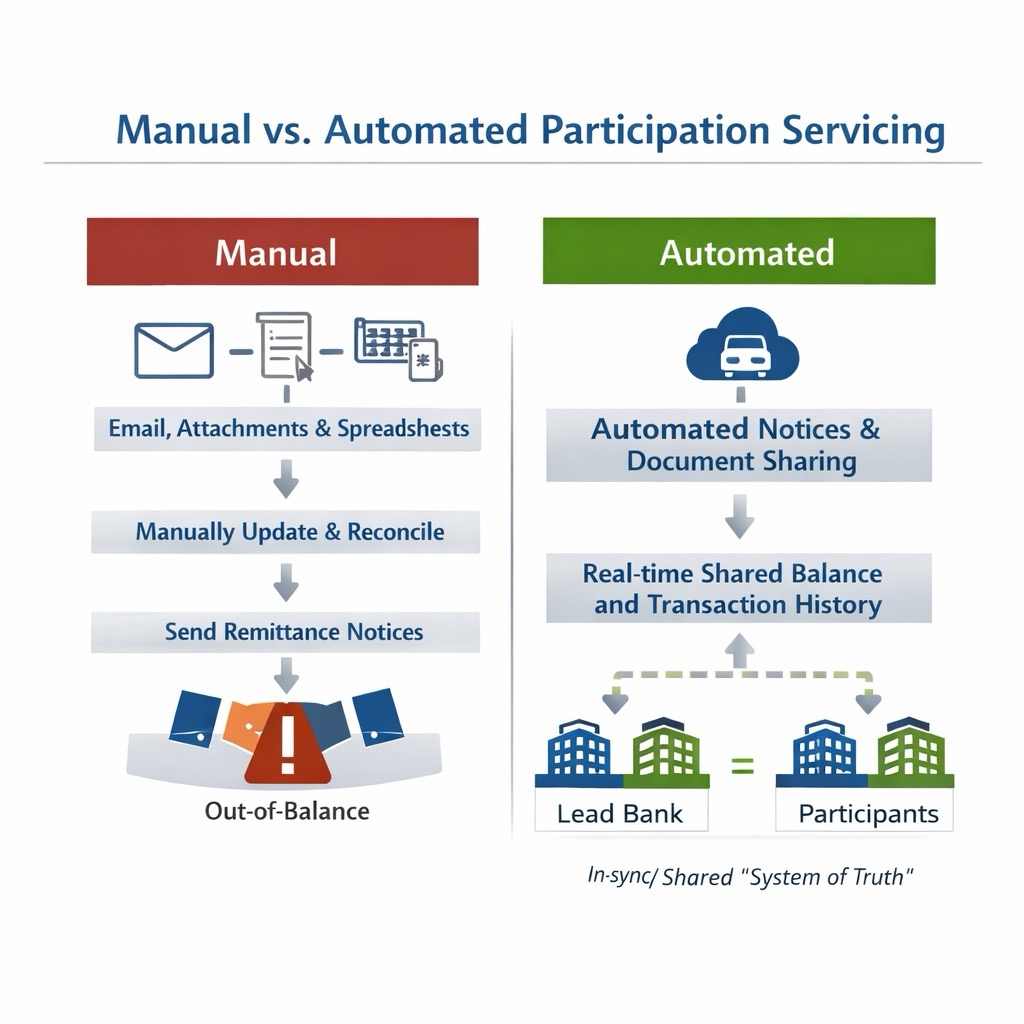
Servicing is simplified. No more maintaining complex, error-ridden, non-audit friendly spreadsheets. Participants can opt-in to receive email and in-platform notifications each time a participation document is uploaded, a payment is disbursed to a participant or a draw and been processed and the participant’s share is requested. Printable forms contain wire instructions allowing them to be used as support for wire transactions by either the originator or the participant. They provide a firm audit trail.

Buying and selling participations allows banks to manage borrower concentrations, manage loan type and geographic concentrations and brings horsepower to the regulatory admonition to “mitigate risk through balance sheet alteration.”

Participate also provides a national marketplace for the purchase and sale of participations greatly expanding the scope of a bank’s contacts.


Talk to BankLabs (501.246.5148) or sales@banklabs.com) to discuss how we can help you manage interest rate risk.


Construction Loan Automation helps increase draw incom

Loan profits increase in 2020 according to MBA report

By Insights, Uncategorized

The average profit on each loan originated in 2020 was up significantly compared to the average profit in 2019. Construction loan automation streamlines the loan process, resulting in quicker turnaround.

“Independent mortgage banks and mortgage subsidiaries of chartered banks made an average profit of $4,202 on each loan they originated in 2020, up from $1,470 per loan in 2019, according to the Mortgage Bankers Association’s (MBA) Annual Mortgage Bankers Performance Report.”


What this means for Lenders

What does this mean for lenders? Increasing draw fee income is on everyone’s mind. Bankers are turning to new technology like construction loan automation to do just that. Construct is an online tool helping banks streamline their construction lending process, and borrowers love using it. It’s a great way to differentiate your bank for the competition.

Bank leaders around the country are getting behind loan automation tools like Construct as a way to increase their interest fee income. By speeding up the process, lenders are saving days on their loan cycles, resulting in higher margins.

How Construct Helps

What else can loan automation tools do for you? Lenders are finding that staff has a greater capacity to take on more loans with Construct, because so many of the tedious steps are taken out of the equation for them. Instead of 100 projects, some lenders are able to now handle 250 projects using Construct. As the construction sector bounces back from Covid, more companies will be looking for loans. In fact, demand for newly constructed housing is on the rise too. This is great news for lenders looking to increase their project portofolio.

Construct takes the spreadsheets out of the lending process and sends users real time alerts. When an inspection is done, you automatically get notified and can complete the next steps from anywhere, right from your phone, in minutes.


IMB Production Volumes and Profits Reach Record Highs in 2020 | Mortgage Bankers Association (mba.org)

Construction Loan Automation helps increase draw incom

10 ways that construct save bankers time

CALCULATOR

By Article, Insights, Uncategorized No Comments

More banks are looking to balance their sheets than ever before

Participate is helping bankers better manage their balance sheets. 


Innovating Community Banking: A Conversation with Participate’s Matt Johnner

By Blog, Insights, Video Interview

Explore the transformative journey of community banking through Participate’s lens, as shared by Co-founder & President Matt Johnner in his recent podcast with Kevin Horek on Building The Future.

Community banks are the unsung heroes of the financial world, crucial to the prosperity of local economies and communities. However, these institutions face unique challenges, particularly in the realm of loan participation. Recognizing the need for innovation, Participate, a subsidiary of BankLabs, is redefining the approach to loan participation for community banks, making the process simpler, more secure, and significantly more efficient.

A Visionary Conversation on Empowering Growth

In an enlightening conversation on the Building The Future podcast, Matt Johnner delves into how Participate is spearheading changes in the loan participation process. This discussion isn’t just about the strides in technology; it’s a deeper look into the mission of democratizing loan trading for community banks, allowing them to expand their services, manage risks better, and enhance their income streams.

Innovation at the Heart of Community Banking

The essence of Participate’s mission is to ensure that community banks, irrespective of their size, have the tools and opportunities to thrive. By providing an end-to-end participation loan management tool, Participate stands as a beacon of innovation, propelling community banks into a future where they’re not just surviving but flourishing.

Building a Sustainable Future for Banking

This podcast episode encapsulates the drive, innovation, and integrity behind Participate. It represents a commitment to a future where community banking is stronger, more connected, and capable of serving community needs more effectively than ever. It’s a narrative about creating a banking environment where every loan and every community bank has a place.

We invite our BankLabs audience to delve into this vital conversation, as we look not just toward the future of banking but actively partake in shaping it. Participate is more than a platform; it’s a movement towards a future where community banking is empowered to lead, innovate, and prosper.

BankLabs’ Loan Participation Platform Secures Investment from FINTOP Capital & JAM FINTOP Banktech, and Launches New Spin-Out Company ‘Participate’

By Insights, Press Release

BankLabs’ Loan Participation Platform Secures Investment from FINTOP Capital & JAM FINTOP Banktech, and Launches New Spin-Out Company ‘Participate’

Little Rock, July 26, 2023 — BankLabs, an innovation lab for banking technology, announces its strategic spin-out and significant investment from FINTOP Capital & JAM FINTOP Banktech, the preeminent FinTech venture capital firms led by fintech and banking veterans and supported by America’s leading banks. This partnership endorses BankLabs’ mission to democratize loan trading for all financial institutions, irrespective of size.

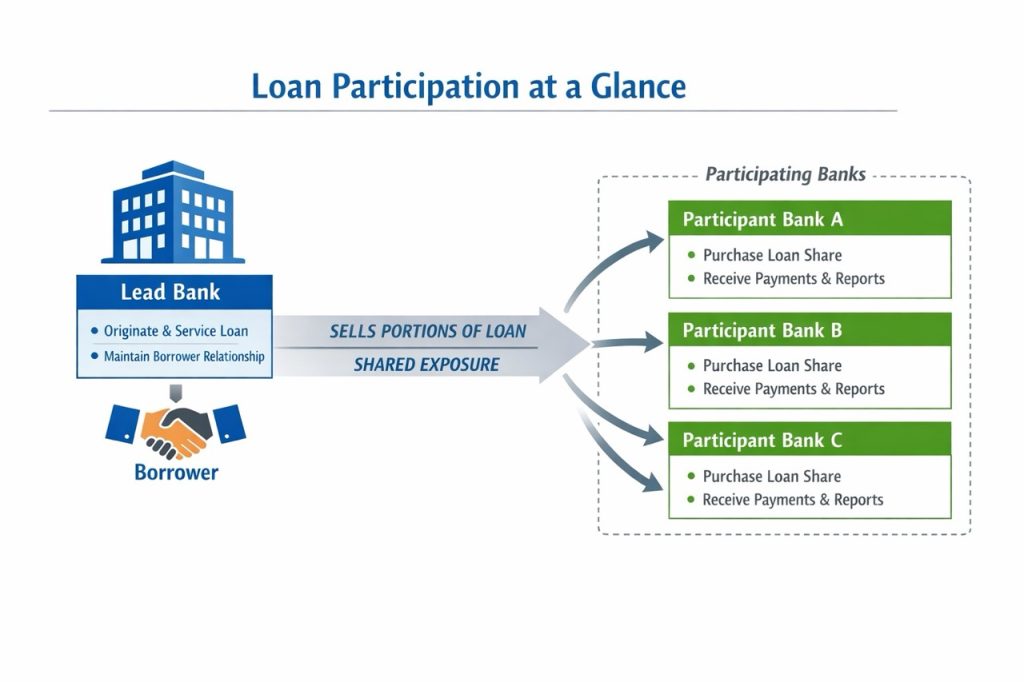
Participate is built to reduce friction in the loan participation process through cloud-native technology and curated buy-side clubs. This transformational platform is rapidly expanding, already patented, and promises to change the dynamics of the banking landscape forever. Participate automates the process of selling a portion of a new or existing loan. Once a loan is closed, Participate automates the back-office workflow including principal and interest splitting, collaboration on balances, notifications to the buy-side, variable interest rate management, secure document management and much more.

“We are delighted to partner with FINTOP & JAM FINTOP,” said Matt Johnner, President of BankLabs and Participate. “This is more than an investment, it is the creation of a new organization focused on helping America’s lenders improve and manage liquidity, reduce concentration risk and boost net income. JAM FINTOP’s involvement goes well beyond financial resources; they are essentially an R&D unit for the approximately 100 banks in their network. The FINTOP Capital team also brings impressive relationships beyond traditional banks as well. The infusion of their resources and strategic insights will vault Participate to new heights.”

Mike Montgomery, CEO of BankLabs and Participate shared, “we intend to create an environment where increasing the amount of participation loans creates a form of ‘backup liquidity’ that strengthens a bank’s ability to make necessary or strategic balance sheet adjustments more quickly and efficiently.”

“We see first-hand the struggles of community banks to balance liquidity and easily manage their loan portfolios, and the timing could not be better for a tool like Participate,” adds John Philpott, Partner at FINTOP Capital. It is a privilege to be able to work with professionals like Mike, Matt, and the entire BankLabs Participate team, and we are grateful to be partnering with them.”

For more information, please visit ParticipateLoan.com.

About BankLabs

BankLabs is an innovation lab committed to redefining banking products for the future to help community oriented financial institutions succeed. With its groundbreaking Participate platform, BankLabs is at the forefront of transforming the loan trading process, reducing friction, and democratizing loan trading for financial institutions of all sizes. The spin-out of Participate follows the successful creation, growth and sale of Construct to Abrigo, a leading financial technology company with over 2,400 financial institutions as clients. Construct is the #1 construction loan automation and payments product in the country. Follow BankLabs for more innovations to come.

About FINTOP Capital FINTOP Capital is a venture capital firm focused on early-stage FinTech companies. With over $700 million in committed capital across five funds, FINTOP brings decades of FinTech founding and operating experience to the boardroom, partnering with innovative entrepreneurs to push the frontiers of the financial services sector. For more information, visit fintopcapital.com.

About JAM FINTOP

JAM FINTOP is a joint venture between JAM Special Opportunity Ventures and FINTOP Capital. The partnership brings together bank experts and seasoned fintech entrepreneurs to invest in companies changing the way financial institutions and their customers move, track, and interact with money. For more information, visit https://www.jamfintop.com.

Participate Contact

Matt Johnner, President Participate & BankLabs

matt.johnner@banklabs.com

214.208.0436

JAM FINTOP Contact

Brittani Roberts, Principal FINTOP Capital

brittani@fintopcapital.com

630.726.2748

Matt Johnner

Banklabs President & Co-founder Matt Johnner accepted into Forbes Finance Council

By Insights, Press Release

Forbes Finance Council is an Invitation-Only Community for Executives in Accounting, Financial Planning, Wealth and Asset Management, and Investment Firms

April 19, 2023 —Matt Johnner, the President & Co-founder of BankLabs, a provider of innovative banking technology solutions, has been accepted into Forbes Finance Council, an invitation-only community for executives in accounting, financial planning, wealth and asset management, and investment firms.


Matt Johnner

Matt Johnner was vetted and selected by a review committee based on the depth and diversity of His experience. Criteria for acceptance include a track record of successfully impacting business growth metrics, as well as personal and professional achievements and honors. 


“We are honored to welcome Matt Johnner into the community,” said Scott Gerber, founder of Forbes Councils, the collective that includes Forbes Finance Council. “Our mission with Forbes Councils is to bring together proven leaders from every industry, creating a curated, social capital-driven network that helps every member grow professionally and make an even greater impact on the business world.”


As an accepted member of the Council, Matt has access to a variety of exclusive opportunities designed to help him reach peak professional influence. He will connect and collaborate with other respected local leaders in a private forum. Matt will also be invited to work with a professional editorial team to share his expert insights in original business articles on Forbes.com, and to contribute to published Q&A panels alongside other experts. 


Finally, Matt will benefit from exclusive access to vetted business service partners, membership-branded marketing collateral, and the high-touch support of the Forbes Councils member concierge team. 


ABOUT FORBES COUNCILS

Forbes Councils is a collective of invitation-only communities created in partnership with Forbes and the expert community builders who founded Young Entrepreneur Council (YEC). In Forbes Councils, exceptional business owners and leaders come together with the people and resources that can help them thrive.


For more information about Forbes Finance Council, visit forbesfinancecouncil.com. To learn more about Forbes Councils, visit forbescouncils.com.

His Linkedin: https://www.linkedin.com/in/mattjohnner/

Banklabs Webiste: Banklabs.com


Contact Details:

sales@banklabs.com

Mike Montgomery

Two Ideas for Helping Community Banks

By Article, Insights

Understanding the Role and Importance of Community Banks

The recent failures of Silicon Valley Bank and Signature Bank focused a bright light on community banks. Community Banks are the heart of the US Banking system, numbering about 4,500 with this number decreasing by about 100 banks each year.

According to the FDIC, these community banks “play a vital role in the functioning of the US financial system and broader economy, from lending to small business owners and farmers, to providing critical banking services in small towns and rural communities across the nation.”

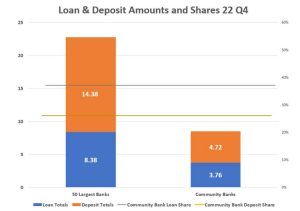
While flattering to the community bank segment, that definition of the role of community banks does not do these critical financial intermediaries justice. As of 12/31/22 community banks (banks other than the 50 largest banks in the US) –

  • Held almost $5 Trillion in deposits
  • Had almost $4 Trillion in loans on their books

loan and deposits 22 Q4

Source: FDIC Call Reports

Additionally community banks:

  • Provide about 60% of all small businesses loans
  • Originate more than 80% of agricultural loans
  • Have nearly 50,000 locations
  • Employ nearly 700,000 people

Source: Independent Community Bankers of America


The Challenge Facing Community Banks

Immediately following the recent bank failures, deposits flowed out of community banks and into large money center banks seeking the apparent safety of “too big to fail” banks.  While this surge has subsequently slowed community banks face significant challenges as interest rates rise, operating costs rise and the lines between mega banks and community banks seem more clearly drawn.

Here are two ideas for strengthening community banks

  • Make deposit insurance available in amounts larger than $250,000 per account. Deposit insurance is the only type of insurance where “one size fits all”. There is no magic in the FDIC’s insurance of $250,000 per account. It is not tied to an inflation-based formula, it has simply been raised by congressional action to deal with then-current conditions.


Since 1934 the amount of maximum deposit insurance has been raised seven times. It was last raised from $100,000 to $250,000 in 2008 to bolster waning depositor confidence in the banking system following The Great Recession.


While $250,000 deposit insurance is sufficient for most consumers, many investors and businesses could be enticed to remain at community banks if additional account insurance was available.


Allow banks to decide how much insurance they need to provide to serve their depositors. Allow these banks to purchase additional deposit insurance.

Some banks may decide that the $250,000 base amount is sufficient for their depositors while other banks may, at their own expense, purchase additional deposit insurance. This also matches deposit insurance expense with the users of the insurance rather than apportioning premiums among all insured institutions as is now the FDIC’s practice.


  • Encourage community banks to better compete with large banks by creating an incentive for community banks to create incentives for time deposits. Once upon a time, financial institutions provided demand deposit accounts (checking) and time deposits (savings accounts and CDs). An entire sector of financial institutions developed that provided only time deposits (Savings and Loans and Building Associations). People bought CDs or simply saved because the interest rates available were attractive and provided a risk free return.

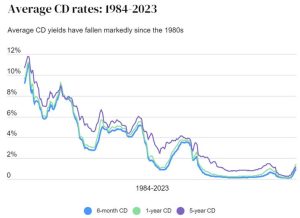
A quick Google search showed that today, investors can achieve 4% plus interest rates for relatively short-term CD but over time, the average CD rate has declined precipitously –

average cd rates 1984-2023

Source: Bankrate


Note that in 1984, investors were able to buy CDs with yields over 11%. It’s interesting to note that yield on the S&P 500 in 1984 was -5.9%. That’s negative 5.9%.

Let’s step back and look at that in real dollars. $1,000 invested in a CD earned about $110 while the same amount invested in the S&P 500 lost about $60. This makes a strong risk-free return look quite attractive.

By 2009, CD yields fell below 1% and yields virtually evaporated in late 2021 with banks paying .09% for a 6 month CD. Let’s put that in real dollars: $1,000 invested in a CD earned the investor 90 cents Yes, 90 cents. This seems like a disincentive to invest in a risk-free time deposit when the S&P 500 yielded about 13% that year. Clearly, investors were not motivated by the risk-free almost zero interest rates provided by bank time deposits. For over ten years, CD yields were not comparable with yields of other investments.

We suggest that the Treasury provide a credit facility available only to community banks that would allow the banks to offer a minimum 5% time deposit with at least a 100 basis point return. As interest rates float up, banks would not need to activate the facility as their return would be sufficient to encourage banks to offer attractive time deposit rates.

How could this work? Through a repurchase agreement. The US Treasury sells a treasury instrument to community banks with a remaining term approximately equal to the term of CDs sold. Contemporaneously, Treasury enters into a repurchase agreement with the community bank to repurchase the instrument in the future for an amount that would provide the bank with a 100-basis point return for the term of the CD.

This approach is consistent with the Treasury’s current moves to reduce the supply of money through Quantitative Tightening.

While 100 basis points would not provide a windfall return for the banks, it would provide a profit for community banks and a minimum 5% return might encourage investors to fly from at-risk investments to risk free investments at banks.

Offering competitive rate time deposit options to consumers might cure another national problem. It might help the 10% of Americans with no savings and the additional 39% of Americans who report that their savings balances are less than they were one year ago begin or return to saving.


no emergency savings

Source: Bankrate


This solution might get America saving again.

silicon valley bank

THE SILICON VALLEY BANK SAGA PART 2: THREE WAYS TO DEAL WITH INTEREST RATE RISK (IRR)

By Article, Insights

Tune in to the audio version of the article:


The Silicon Valley Bank Failure

In “THE SILICON VALLEY BANK SAGA PART 1: WHAT HAPPENED? BY THE NUMBERS” we searched behind the popular press pronouncements to explore elements of Silicon Bank’s risky investment in long term treasury instruments and how these investments eventually contributed to the failure of the Bank.


Banking is Packed with Inherent Risks

Banks constantly face a variety of risks in the ordinary course of their business: in receiving deposits and originating loans or investing deposits for a return in excess of the cost of the deposits. The Office of the Comptroller of the Currency (OCC) has identified nine categories of risks banks face: Credit, Interest Rate, Liquidity, Price, Foreign Exchange, Transaction, Compliance, Strategic and Reputation.

Each day, Bankers must navigate this complex, shifting mine field of risks any one of which may be sufficient to sink the Bank.

As recently demonstrated by the Silicon Valley Bank failure, interest rate risk alone may be sufficient to cripple and eventually destroy a bank. In SVB’s failure, the sixteenth largest bank in the United States was unable to fend off a full-fledged bank run. It succumbed to a tsunami of withdrawals in only a matter of a few days.

The Bank’s end was swift and sure.


Who’s Responsible for Addressing Interest Rate Risk?

The short answer is: everyone in banking governance and management is responsible.

In a 2010 document “Advisory on Interest Rate Risk Management”, the FDIC sets out general standards for IRR management. Numerous subsequent pronouncements by each regulator reinforce the general framework expressed in this Advisory.

The Advisory admits the interest rate risks banks and bankers face ”The regulators recognize that some degree of IRR is inherent in the business of banking.”

Responsibility is then heaped on the Board of Directors –

“Existing interagency and international guidance identifies the board of directors as having the ultimate responsibility for the risks undertaken by an institution – including IRR.” (Emphasis added)

Senior management then gets its share of responsibility –

“Senior management is responsible for ensuring that board-approved strategies, policies, and procedures for managing IRR are appropriately executed within the designated lines of authority and responsibility.” (Emphasis added)

If you are reading this post, you likely have responsibility for conquering interest rate risk at your institution. Ominously, the penultimate paragraph contains an admonition regarding the failure of Directors and Managers to effectively manage IRR –

“Material weaknesses in risk management processes or high levels of IRR exposure relative to capital will require corrective action.”

History will determine the degrees of responsibility of the Board and Managers of Silicon Valley Bank bear in the Bank’s stunning failure.


What’s a Banker To Do?

In a section title “Risk Mitigating Steps” the FDIC provides some general guidance as to tools to manage IRR. Specifically, should IRR exceed or approach the institution’s limits “institutions can mitigate their risk through balance sheet alteration and hedging.”

Bankers should not wait until the risk threshold is in sight (or is behind them) to take action. Proactive balance sheet management helps banks avoid traps like the traps Silicon Valley Bank faced.

The next paragraph describes appropriate hedging activities but no guidance is provided regarding balance sheet alteration.”

Bankers understand the asset side of the Balance Sheet. Assets revolve around two accounts: Cash and Loans Receivable.

Originating loans can be time consuming. Properly structuring loans may require expertise that is outside the bank’s skill set. Local loan demand may be insufficient to meet the bank’s lending needs. Loan servicing can be expensive and tedious.

Participate solves these problems. By providing a device-independent platform common to both Originators and Participants, participation communication is streamlined. Participation documents can be securely shared, and messages can be exchanged between Originator and Participant from within the Participate platform. The tedious back and forth process of agreeing on terms and executing Participation Agreements is handled with the click of a button. Standardized documents can be e-signed in a quick and seamless workflow.

The old participation slog can be reduced from days or weeks to minutes or hours.

Servicing is simplified. No more maintaining complex, error-ridden, non-audit friendly spreadsheets. Participants can opt-in to receive email and in-platform notifications each time a participation document is uploaded, a payment is disbursed to a participant or a draw and been processed and the participant’s share is requested. Printable forms contain wire instructions allowing them to be used as support for wire transactions by either the originator or the participant. They provide a firm audit trail.

Buying and selling participations allows banks to manage borrower concentrations, manage loan type and geographic concentrations and brings horsepower to the regulatory admonition to “mitigate risk through balance sheet alteration.”

Participate also provides a national marketplace for the purchase and sale of participations greatly expanding the scope of a bank’s contacts.


Talk to BankLabs 501.246.5148 or sales@banklabs.com to discuss how we can help you manage interest rate risk.


svb

THE SILICON VALLEY BANK SAGA PART 1: WHAT HAPPENED? BY THE NUMBERS

By Article, Insights

Failure Theories Abound

Silicon Valley Bank’s recent failure was capable of generating a systemic contagion that could have crippled economies worldwide. Rapid response by US regulators and monetary authorities avoided this close call, the likes of which may never have occurred in the economic history of the United States.

Fueled by rampant short selling, a plummeting stock price on the NASDAQ exchange and a full-blown bank run (some called it a “Bank Sprint”) driven into a frenzy by social media and instantaneous communication, Silicon Valley Bank spun out-of-control crashing ignominiously on an otherwise quiet Friday in early March 2023.

Financial pundits and financial know-littles had a field day with soundbites about the causes of the Bank’s failure. For example –

  • The Bad Management Theory – SharkTank contestant Kevin O’Leary called the management of SVB “idiots”. It subsequently came to light that companies in which O’Leary is involved had billions deposited at the bank.
  • Political Theory – Florida governor Ron DeSantis, who is expected to run for President in 2022 blamed the Bank’s failure on “WOKE politics”.
  • Off-kilter Cryptocurrency advocate Cointelegraph blamed the Bank’s failure on unnamed regulators’ conspiracy to destroy Cryptocurrency.

While the theories about reasons for the Bank’s failure are uncountable, any banker will tell you “The numbers don’t lie” and the numbers at Silicon Valley Bank foretold the likely implosion of the bank several years before the bank finally failed.


The Bank Grew at Implausible Rates

Founded in 1983, Silicon Valley grew steadily over the years with its “Dedication to Entrepreneurs”. By 2016, Silicon Valley was the 44th largest bank in the US. The bank’s relatively modest growth continued through 2019, however in 2020, the Bank’s growth exploded at eye-popping rates. From 2019 to 2020, the Bank grew from the 37th largest bank to become the 29th largest in assets.

The next year, the bank vaulted over fourteen other banks to become the 15th largest bank in the US.

FDIC Call Reports chart the incredible growth of the Bank. In the 2016-2020 period, assets had grown from $44 Billion to $114 Billion. Likewise deposits lept from $79 Billion to $206 Billion.

Silicon Valley Bank’s explosive growth did not halt there. In 2021, deposits grew 86% from $206 billion to $382 Billion almost doubling in a single year.

Silicon Valley was awash with cash.


Interest Rates Made Long-Term Treasuries Look Appealing

Banks primarily invest deposits in loans. Lending is the primary function of banking. “Excess” cash is often invested in government securities usually of a very short term to avoid interest rate risk and to roughly match the maturities of the securities with expected short term cash needs.

Silicon Valley flipped this formula with catastrophic results.

United States monetary authorities had maintained near zero interest rates for a prolonged period beginning with a precipitous drop in late 2008 in response to the Banking Crisis extending into late 2021.

Interest rates reached their nadir in late 2020 when the bell weather 10 Year Treasury Note fell to .64% –


interest rates graph

Source: Macrotrends

As long-term interest rates were falling, so were short term rates. 26 week T-Bill Coupon Equivalents yields almost vaporized, dropping to .11% during Q3 2020.

While both long and short term interest rates dropped and deposits gushed into Silicon Valley Bank, long term instruments maintained a substantially higher return than short term instruments –


2020-2021 Securities Loan growth

Silicon Valley Bank took the bait and bought long term treasury securities rather than lend the deposits or invest in short term instruments. From 2020 to 2021, securities holdings at SVB increased at a dizzying pace while loans grew at modest rates –

Interest rate increase 2022

Unfortunately for the Bank, interest rates, which had remained flat since early 2020, began to rise. In early 2022 in an effort to curb inflation that was running at 1970s-like rates, the Federal Reserve Bank began a series of seven rate hikes which would raise the Fed Funds Target Rate from almost zero to 4.25% – 4.5% in only nine months –

Interest rates increase 2022 table

Source: Board of Governors of the Federal Reserve System

As a result, a 10-year bond purchased at par in 2020 with a 1% coupon rate for $1 million would have plummeted in value to about $800,000 two years later when yields had risen to 4.5%. Silicon Valley’s massive securities purchases were worth substantially less than face value. And depositors were now withdrawing funds at massive levels.


The Bank Run Begins

While exact withdrawal rates are not available, the press has described the bank run as being driven by social media. Using Google search results as a proxy for interest in the Bank that was translated into withdrawal action by depositors, “Silicon Valley Bank” was a sleepy search term with nominal search activity until March 8 –

Interest over time graph

On March 8 – two days before the Bank failed – searches began to surge. By the day of failure search activity was at its peak –


google trends searches for silicon valley withdrawal

Sources: Google Trends

This proxy indicates that in only three days – the two days before and the day of the closing – the full-blown bank run was in progress. This conclusion is buttressed by news reports citing a single day withdrawal total at $42 Billion, leaving the Bank $1 Billion short of available cash to pay depositors.

To meet the withdrawal deluge, Silicon Valley Bank looked to their now heavily discounted long bond portfolio to meet liquidity demands. Selling at discounted prices would have effectively bankrupted the Bank. Unable to instantly raise equity, Bank management had now run face first into an insurmountable problem: Silicon Valley Bank, days before, the 16th largest bank in the United States was insolvent, had failed and required regulatory intervention to close the bank and end the bleeding.

On Friday, March 10, the California Department of Financial Protection and Innovation closed the Bank and appointed the Federal Deposit Insurance Corporation as the Receiver for Silicon Valley Bank.


Conclusion

What should Silicon Valley Bank have done to better manage the interest rate risk that eventually caused its failure?

Was the Bank’s failure inevitable?

What could Silicon Valley done to manage interest rate risk?

See our next post “THE SILICON VALLEY BANK SAGA PART 2: THREE WAYS TO DEAL WITH INTEREST RATE RISK


Talk to BankLabs 501.246.5148 or sales@banklabs.com to discuss how we can help you manage participations and interest rate risk.